Best National Parks for Families: 7 Kid-Friendly Picks
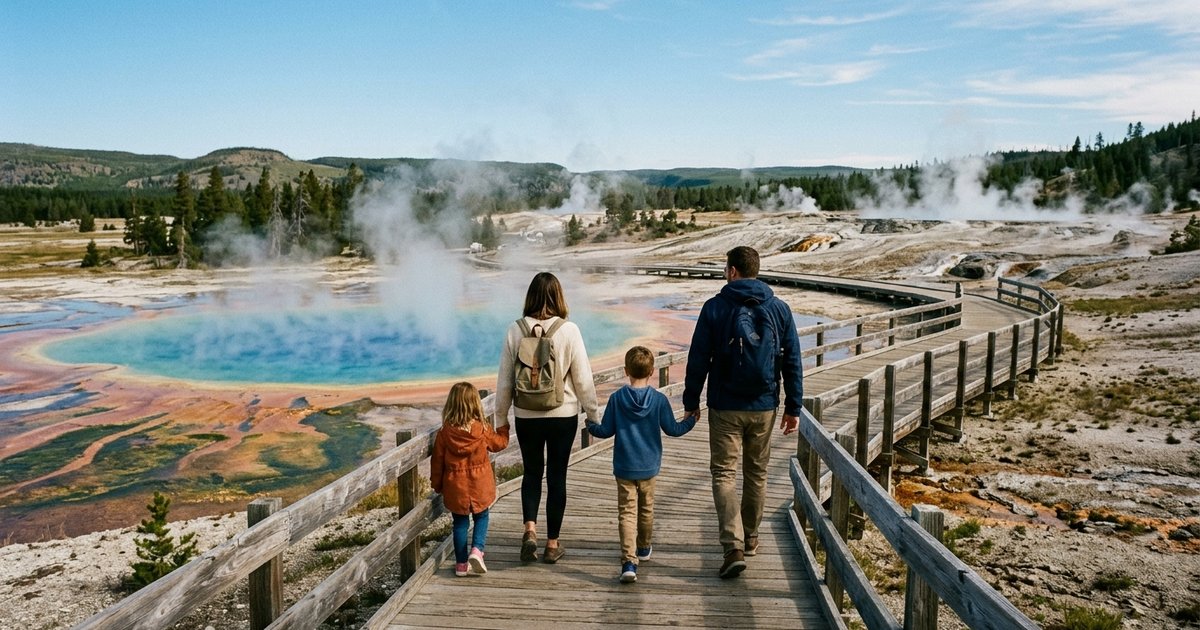
The best national parks for families are the ones where kids can see something spectacular without a long, hard hike: geysers on boardwalks at Yellowstone, a paved rim walk at the Grand Canyon, a riverside stroll in Zion, car-free carriage roads in Acadia, alligators a few steps from the trail in the Everglades, and easy valley walks in the Great Smoky Mountains and Rocky Mountain. Below is what makes each park work for children, the easiest highlights to aim for, and the planning details (reservations, fees and safety rules) that trip up families most often.
At a glance
| Park | State | Best family highlight | Plan ahead for |
|---|---|---|---|
| Great Smoky Mountains | Tennessee / North Carolina | Cades Cove walks and bike rides | Parking tag required |
| Acadia | Maine | Car-free carriage roads | Busy routes; start early |
| Yellowstone | Wyoming / Montana / Idaho | Geysers and hot springs on boardwalks | Strict thermal-area and wildlife rules |
| Grand Canyon (South Rim) | Arizona | Paved Rim Trail with shuttle stops | Heat, water, edge safety |
| Zion | Utah | Riverside Walk and other short trails | Shuttle-only canyon road most of the year |
| Everglades | Florida | Anhinga Trail wildlife viewing | Wildlife viewing is best in winter |
| Rocky Mountain | Colorado | Alpine scenery and lakes | Timed entry reservations in summer and fall |
Great Smoky Mountains National Park
The Smokies are one of the easiest parks for families to drive to from much of the eastern U.S., and there is no entrance fee. Instead, any vehicle parked for more than 15 minutes needs a parking tag (daily, weekly or annual), and America the Beautiful passes don't substitute for it. Buy one online, at visitor centers or at machines; most trailheads don't have machines, so get it before you head out.
For young kids, Cades Cove is the classic stop: a broad valley with historic buildings and short, flat walks. In 2026, Cades Cove Loop Road was planned to be vehicle-free all day on Wednesdays from May 6 through Sept. 30. Bike rental is available near the campground store, which makes for an easy family ride without traffic. Note that the popular Laurel Falls Trail has been closed for rehabilitation, with reopening expected in 2027, so check current closures before planning around a specific hike.
Acadia National Park
Acadia, on the Maine coast, combines ocean views, rocky shoreline and gentle mountain scenery in a compact area. Its standout feature for families is the network of 45 miles of carriage roads built by John D. Rockefeller Jr. and his family between 1913 and 1940. They are closed to cars and shared by walkers, cyclists and horse-drawn carriages, which makes them good for kids on bikes or in strollers. On the busiest routes, the park asks everyone to use courtesy and caution, so keep young riders close.
Yellowstone National Park
Few parks hold a child's attention like Yellowstone: erupting geysers, bubbling mud pots, colorful hot springs and bison by the roadside. Many thermal areas have boardwalks, so even young children can see them up close without a strenuous hike.
The safety rules here matter more than at most parks:
- Always stay on boardwalks and designated trails in thermal areas. The ground can be a thin crust over superheated water.
- Keep children close and don't let them run on boardwalks.
- Stay at least 25 yards from bison and at least 100 yards from bears at all times.
- Pets are not allowed in thermal areas or on boardwalks, even if carried.
Yellowstone is huge, and driving between areas takes time. Choose one or two regions to base yourself in rather than trying to see everything in a day.
Grand Canyon National Park (South Rim)
The South Rim is the easiest way for families to experience the Grand Canyon. The Rim Trail runs about 13 miles from the South Kaibab Trailhead west to Hermits Rest, mostly paved with gentle grades, and the park describes it as excellent for visitors who want an easy walk with minimal elevation change. Because many shuttle bus stops connect to the trail, you can walk a short section and ride the shuttle back.
Good short sections for kids include the stretch around Mather Point and Yavapai Point near the visitor center, and the paved Hermit Road Greenway Trail between Monument Creek Vista and Hermits Rest. Things to know:
- There is no water along the Rim Trail itself; fill up in Grand Canyon Village or at Hermits Rest, and carry water and salty snacks.
- Hold young children's hands near the edge, and allow the slowest walker to set the pace.
- In summer, walk in the cooler parts of the day and watch for afternoon thunderstorms and lightning.
Zion National Park
Zion's towering red cliffs are impressive from the canyon floor, and several of its best walks are short. During the shuttle season, visitors can't drive private vehicles on the Zion Canyon Scenic Drive; NPS describes access as shuttle-only from early March through late November, so families ride the free shuttle. That removes parking stress but means planning around shuttle stops and not waiting for the last bus of the day.
Easy options for kids:
- Riverside Walk: about 2 miles round trip, rated easy and mostly paved, at the Temple of Sinawava.
- Lower Emerald Pool: about 1 mile round trip with modest elevation gain.
- Grotto Trail: half a mile one way, an easy hike.
Flash floods are a serious hazard in Zion's canyons, even under blue skies, because storms upstream can send water through quickly. Check the forecast and posted flash flood information before any canyon or river hike, and bring plenty of water.
Everglades National Park
The Everglades is a strong choice for a winter family trip. The Anhinga Trail, starting from the Royal Palm Visitor Center about four miles from the main park entrance, is a 0.8-mile round-trip wheelchair-accessible walk through sawgrass marsh. It's one of the park's most popular trails because of its wildlife; you may see alligators, turtles, anhingas, herons and egrets, especially in winter. Keep children well back from the water's edge and never feed wildlife. If you visit in the warmer months, bring insect repellent, sun protection and extra water.
Rocky Mountain National Park
Rocky Mountain offers mountain lakes, wildflower meadows and high-alpine scenery, much of it reachable by car. The catch is reservations. In 2026, a timed entry permit was required for park entry from 9 a.m. to 2 p.m. daily, May 22 through Oct. 12. A separate Timed Entry+ Bear Lake Road reservation covered that corridor from 5 a.m. to 6 p.m. through Oct. 18. Permits are booked through Recreation.gov, cost a $2 processing fee on top of the entrance fee, and sell out quickly. Families who can enter early in the morning avoid the requirement, which also means cooler temperatures and better wildlife viewing.
The park sits at high elevation, so take it slow on the first day, drink plenty of water and pack layers even in summer.
Ways to save and make the trip more fun for kids
- Junior Ranger programs: most National Park Service sites offer one, usually with a free activity booklet from the visitor center. Kids complete activities, take a pledge and earn a badge, which gives structure to a visit.
- Every Kid Outdoors: U.S. fourth graders and their families can get free access to national parks and other federal lands. The pass year runs September 1 to August 31; students complete a short online activity to get a voucher.
- America the Beautiful pass: the annual pass for U.S. residents costs $80 and covers entrance fees at national parks, which pays off quickly if you visit several parks in a year.
- Fee-free days: the National Park Service sets several free entrance days each year; from 2026 these apply to U.S. citizens and residents only.
- International visitors: since 2026, nonresidents 16 and older pay a $100 fee on top of regular entrance at 11 of the most visited parks, including Acadia, Everglades, Grand Canyon, Rocky Mountain, Yellowstone and Zion, unless they hold an annual pass. A $250 nonresident annual pass is available.
Family national park checklist
- Check the park's current conditions and closures page the week you travel
- Book timed entry, lodging and campsites as early as allowed
- Download offline maps; cell service is unreliable in many parks
- Pack water bottles, snacks, sun protection, rain jackets and warm layers
- Bring a small first aid kit and any medicines your family needs
- Set clear rules with kids about staying on trails and keeping distance from wildlife
- Plan one main activity per day and leave time for the visitor center and Junior Ranger book
Fees, reservation systems and trail closures change from year to year, so confirm details on each park's official National Park Service page before you go.
Sources: NPS entrance passes; Yellowstone safety; NPS Junior Ranger program.